Expert counterparties and tolling structures key to minimising uncertainty in German BESS market
Minimising counterparty risk is a key component of the German BESS sector, particularly amid ongoing political uncertainty.

Hotel Villa Pamphili Roma, Rome, Italy
Minimising counterparty risk is a key component of the German BESS sector, particularly amid ongoing political uncertainty.
A trio of notable Germany announcements: Aquila Clean Energy EMEA has financed a merchant project, Chint Solar has sold a portfolio to Second Foundation while Twaice will provide analytics on behalf of BayWa r.e..
“The word tsunami describes very well the hype that was in Germany,” said Cristina Yandiola at this week’s Energy Storage Summit.
The upcoming German capacity market must be designed in such a way that enables BESS to generate revenue, according to industry experts.
Greater clarity in both government policy and market mechanisms could be essential if the German BESS industry is to realise its potential.
That’s according to Benedikt Deuchert, head of business development and regulatory affairs for German battery energy storage system (BESS) developer and EPC firm Kyon Energy.
The European Commission has approved a €9 billion (US$10.5 billion) scheme to shore up its energy capacity, which will be open to new and existing projects including energy storage.
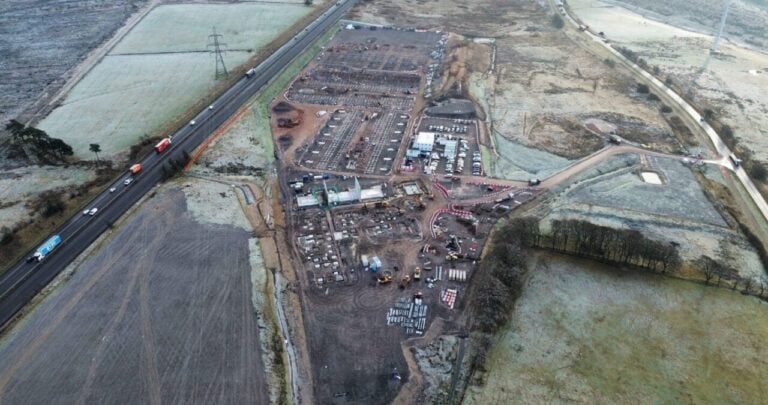
Owner-operator Eco Stor has secured a long-term toll with utility Next Kraftwerke for its 300MW/700MWh project in Förderstedt, Germany, one of the largest being built in the country.
Four large-scale BESS projects totalling a combined 2.2GWh of capacity in major EU markets can now proceed with construction following successful financing by owners OX2, R.Power, BRUC and Aukera.
The European Commission must “acknowledge the clear role of long-duration energy storage,” organisations including Energy Storage Europe and the LDES Council have urged.